
Quick answer: A boutique or tailoring bill should show:
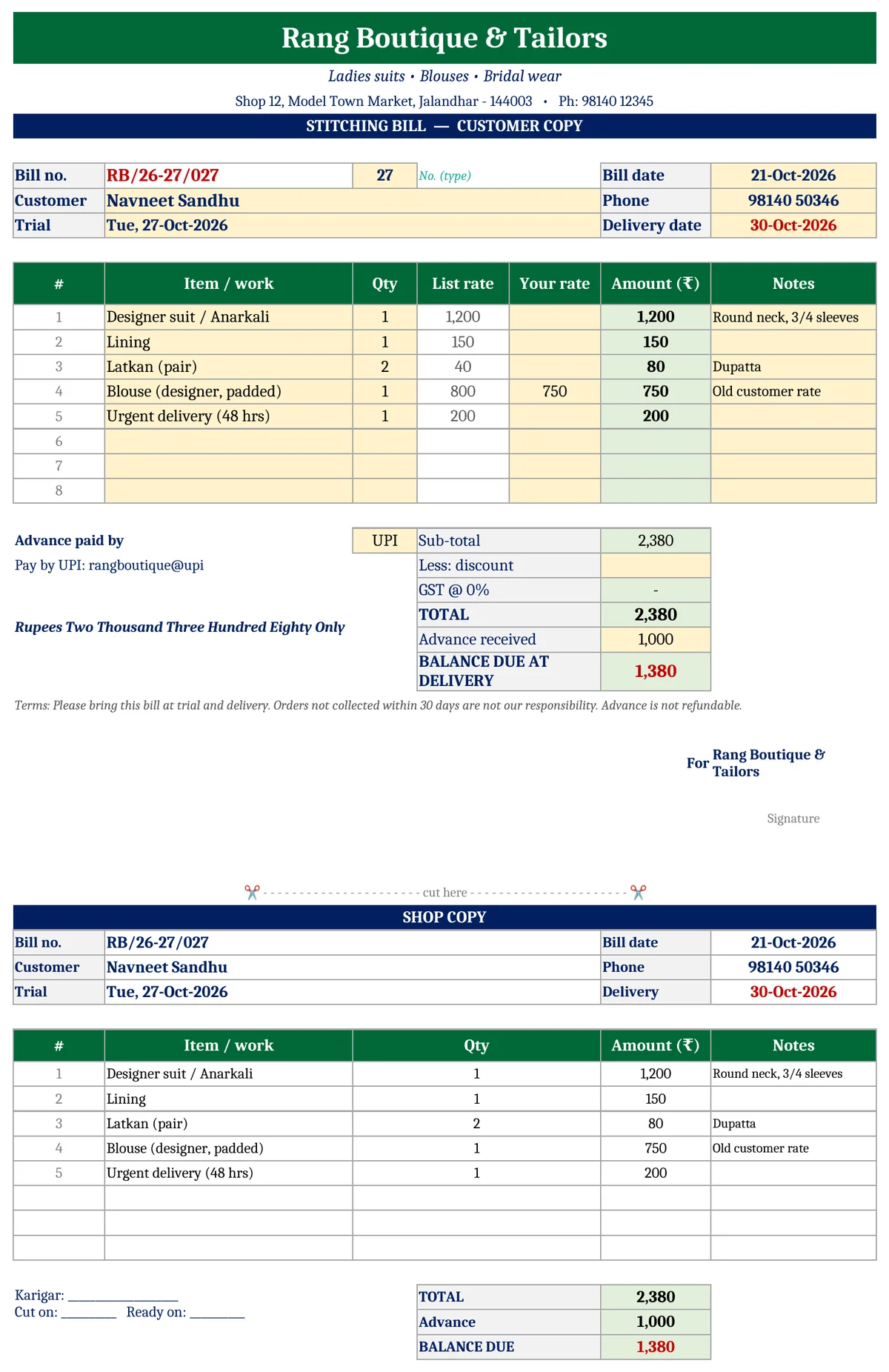
- your boutique name, address and phone, a bill number and the date
- the customer’s name and phone, and the trial and delivery dates
- each item and add-on (lining, piping, latkan, padding, urgent charge) with quantity, rate and amount
- discount, GST if you are registered, the total, the advance taken and the balance due at delivery
Download a free boutique bill format in Excel below. Pick items from your own rate list and the rates fill in by themselves. It prints a customer copy and a shop copy on one A4 page, with the total in words.
Key takeaways
- Rate list of 20 garments and 20 add-ons. Change the rates once and every new bill uses them.
- Up to 8 lines per bill. Type your own rate for a regular customer without changing the list.
- Advance and balance are worked out, with the total in words and your UPI ID printed on the bill.
- A shop copy below the cut line with space for the karigar’s name and the cut and ready dates.
- A printable stitching rate list for your counter. Free, with no macros.
What to write on a tailoring bill
| Part | Why it matters |
|---|---|
| Bill number and date | The customer brings the bill at trial and delivery, so you find the right order quickly. |
| Customer name and phone | To call or WhatsApp when the clothes are ready. |
| Trial and delivery dates | The promise you made. Write them on every bill, especially before Diwali and the wedding season. |
| Items and add-ons, each with its own rate | Lining, piping or an urgent charge written separately avoids arguments at delivery. |
| Advance and balance | Most boutiques take part of the payment at booking. The bill shows exactly what is still due. |
| Terms | For example: orders not collected within 30 days are not your responsibility, and the advance is not refundable. |
Stitching rate list
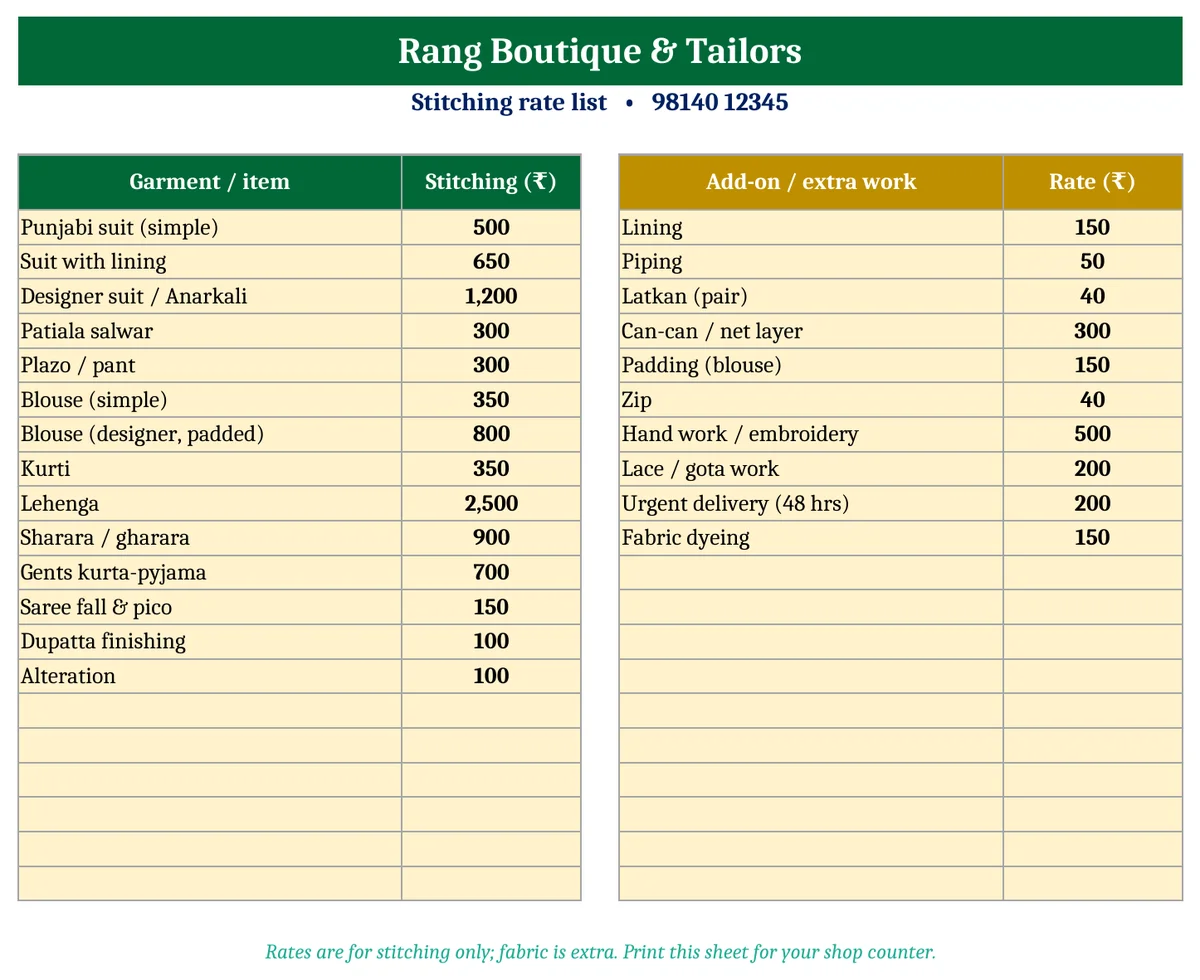
The sample rates are only an example. Stitching rates vary a lot between cities and between a simple shop and a designer boutique, so type your own. Keep add-ons such as lining, piping, padding and hand work as separate lines. Customers accept extra charges more easily when they can see each one.
How to use the template
- Setup: type your boutique name, tagline, address, phone, UPI ID, GST details if any, the bill prefix and your terms.
- Rate List: type your garments and add-ons with your rates.
- Bill: type the bill number, date, customer and dates. Pick each item from the drop-down list and enter the quantity. Use Your rate only when you charge a different rate for this customer.
- Enter the discount and the advance received, then print the page and cut it in two. Or save it as PDF and send it on WhatsApp.
Download the free Boutique Bill Format & Stitching Rate List
There are three sheets: Bill, Setup and Rate List. Fill in the yellow cells; everything else is worked out.
Get updates and new free templates
Your download below doesn’t need this. Leave your WhatsApp number or email and I’ll send you fixes for this file and new free templates. No spam, unsubscribe anytime.

Was this template useful?
Related free templates Free Excel files people download with this one
FAQs
Do I need to charge GST on stitching?
Only if your boutique is registered under GST. Small tailoring shops below the registration limit are usually not registered. Check with your CA. If you’re not registered, keep GST at 0% in Setup and leave the GSTIN blank.
How much advance should I take?
Many boutiques take 30–50% at booking, and the full amount for fabric they buy for the customer. Write the advance on the bill so the balance is clear at delivery.
Can I keep measurements in this file?
This file is for bills and rates. For a free measurement card, see the Tailor Order Book & Measurement Chart.
More free templates
- Tailor Order Book & Ladies Suit Measurement Chart
- Garment Costing Sheet & Fabric Consumption Calculator
- All Excel templates
